The Physics Foundation Model
Project ATOM • v3.1 Beta • Research Preview
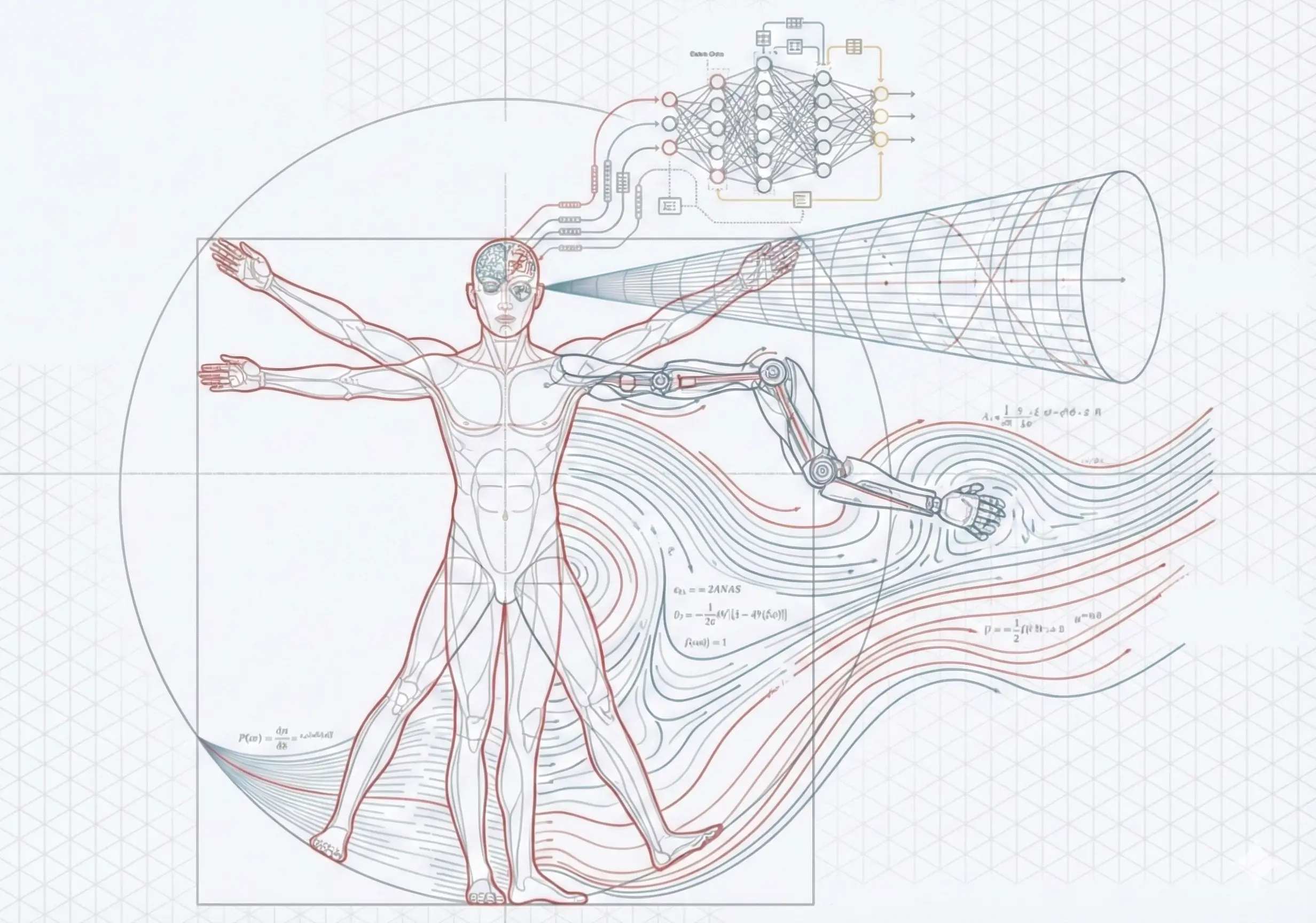
One architecture that perceives physics, controls systems in real-time, and discovers governing laws autonomously — from automotive CFD to analog gravity.
Built On
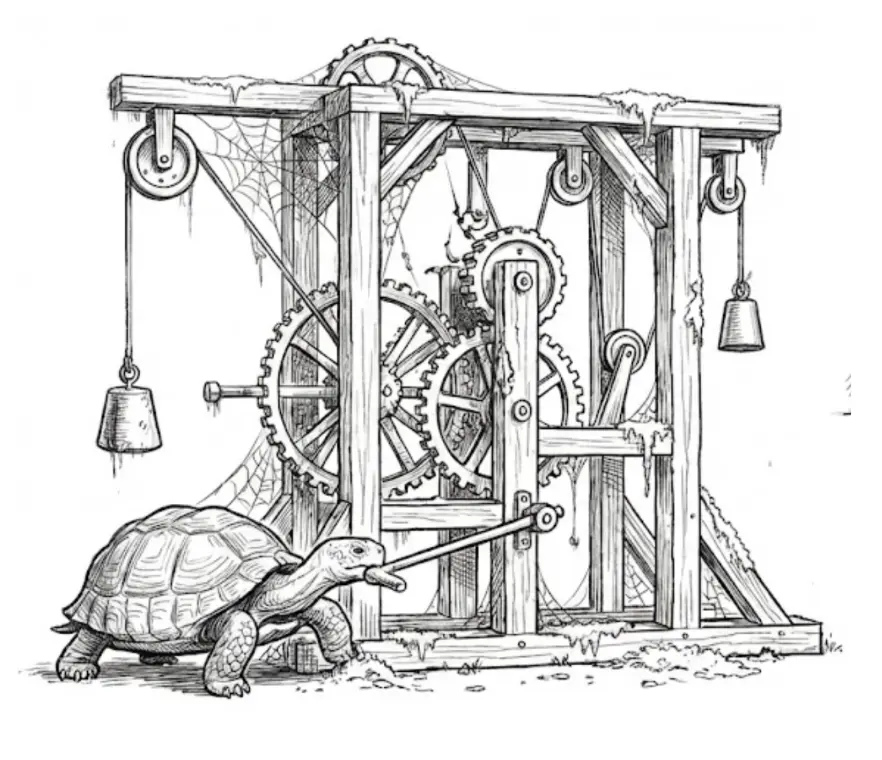
Navier-Stokes equations are computationally irreducible. Simulating a full car aerodynamics run at high-fidelity ($Re > 10^7$) takes weeks on CPU clusters. Engineering iteration crawls to a halt.
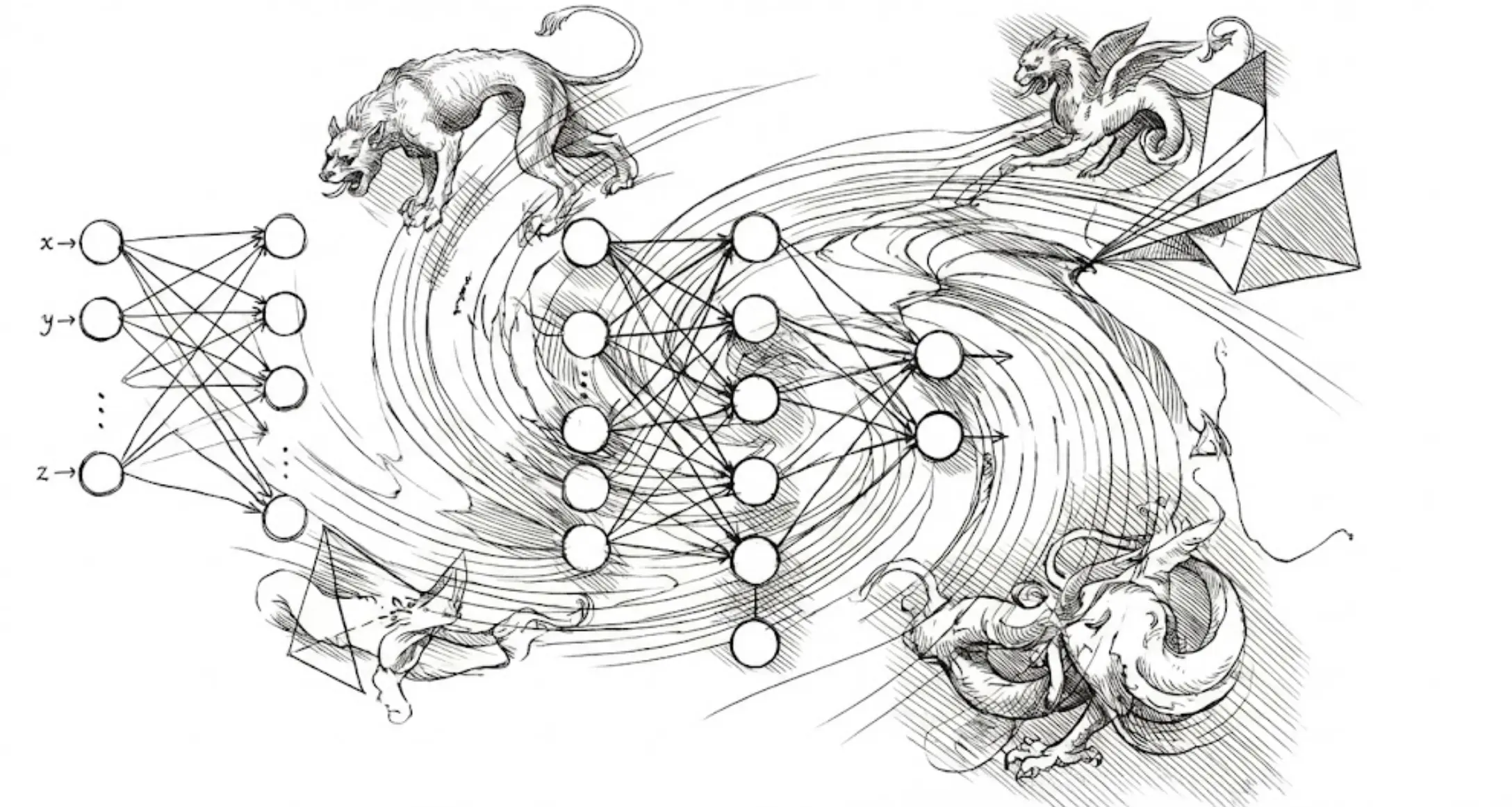
Generative AI (GANs/Diffusion) can "draw" fluids, but they violate conservation laws. They create energy from nothing. In safety-critical domains (Nuclear, Aero), hallucination is fatal.
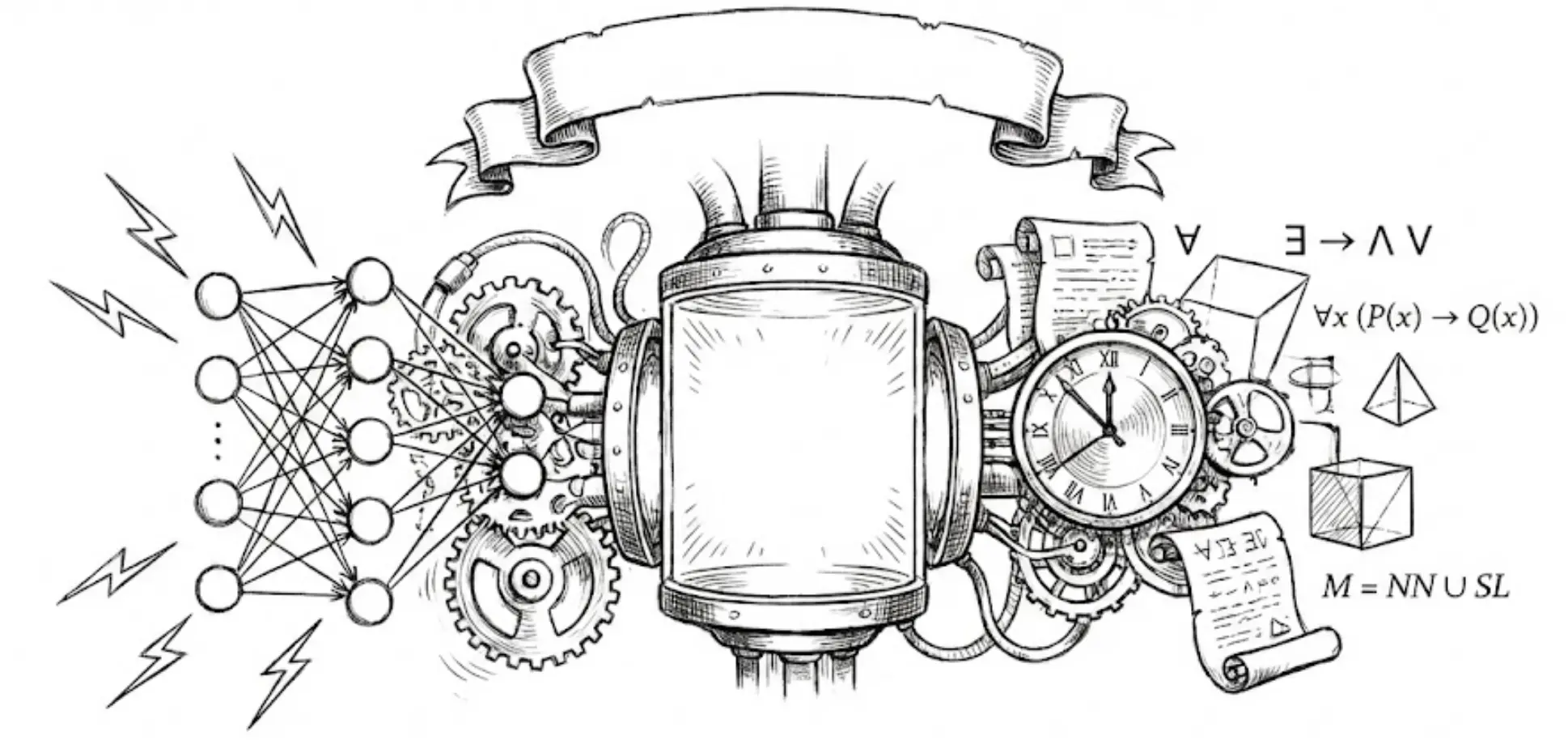
ATOM combines the speed of Neural Networks with the rigor of Symbolic Logic. We embed Conservation of Mass directly into the architecture, guaranteeing physical validity at 16x speed.
System Architecture v3.1
Hover over the diagram to inspect source.
The agent predicts a stream function ($\psi$) rather than raw velocity. Mathematical differentiation guarantees Mass Conservation.
class HelmholtzHead(nn.Module):
""" Enforces Div=0 via Stream Function """
def forward(self, x):
psi = self.proj(x)
# Central Difference (Discrete Curl)
u = (psi[:, 2:] - psi[:, :-2]) / 2.0
v = -(psi[:, 1:-1] - psi[:, 1:-1]) / 2.0
return torch.stack([u, v], dim=-1)
Continuous-time control for continuous-time physics. The network adapts its internal clock speed ($\tau$) dynamically based on turbulence.
class LiquidCell(nn.Module):
def forward(self, input, hidden, time_delta):
# Dynamic Time Constant
tau = torch.sigmoid(self.tau_learner(input))
# ODE Solve (Semi-Implicit)
d_hidden = -hidden / tau + self.synapse(input)
return hidden + d_hidden * time_delta
During the "Sleep Phase," the agent distills neural weights into human-readable differential equations using genetic programming (PySR).
> [SCIENTIST] Waking up...
> [MEMORY] Reading trajectory buffer (Size: 80k)
model = PySRRegressor(
binary_operators=['+', '*', '/', '-'],
unary_operators=['cos', 'exp', 'sin'],
model_selection="best"
)
> DISCOVERED LAW (Bernoulli):
> $R = 20.0 - \frac{1}{v}$
High-fidelity Lattice Boltzmann solver (D3Q27) generates ground truth data using Entropic-Stabilized (KBC) collision models.
stepper = IncompressibleNavierStokesStepper(
grid=grid,
boundary_conditions=[bc_floor, bc_slip, bc_car],
collision_type="KBC" # Kinetic Boundary Condition
)
# Run Physics
f_0, f_1 = stepper(f_0, f_1, bc_mask, omega, step)
During the "Sleep Phase," the agent distills its neural weights into human-readable differential equations using genetic programming (PySR).
> [SCIENTIST] Waking up...
> [MEMORY] Reading trajectory buffer (Size: 80,000)
model = PySRRegressor(
binary_operators=['+', '*', '/', '-'],
unary_operators=['cos', 'exp', 'sin'],
model_selection="best"
)
> DISCOVERED LAW (Bernoulli):
> Reward = 20.0 - (1.0 / velocity)
Continuous-time control for continuous-time physics. The network adapts its internal clock speed ($\tau$) dynamically based on input turbulence.
class LiquidCell(nn.Module):
def forward(self, input, hidden, time_delta):
# Dynamic Time Constant
tau = torch.sigmoid(self.tau_learner(input))
# ODE Solve (Semi-Implicit)
d_hidden = -hidden / tau + self.synapse(input)
new_hidden = hidden + d_hidden * time_delta
return new_hidden
System 2 Reasoning
Deep Learning is excellent at intuition but terrible at explanation. ATOM solves this by periodically "sleeping" to distill its experiences into compact, human-readable physical laws.
"Reward crashes when velocity approaches zero."
Candidate: 20.007 - x1 / (x1^2)
$$R \approx 20 - \frac{1}{v}$$
Traditional solvers (JAX Oracle) provide ground truth data. ATOM provides Physical
Laws.
By enforcing Symplectic Manifolds, ATOM explores a multi-modal Pareto
Frontier—autonomously evolving
from
Linear Damping to Inverse Singularity Control.
*Benchmarks on Consumer Hardware, Ready to scale
Touch to interact • D2Q9 Lattice Boltzmann Solver • Running Locally (JavaScript)
"The computer is just a tool. The discovery is human."
- Computational
Anatomy Labs
In this showcase, ATOM demonstrated Strategic Plasticity. Instead of converging to a single solution, the agent independently discovered a Pareto Frontier of three distinct physical mechanisms—moving from reactive damping to preventative pressure maintenance.
Benchmark vs. Literature
| Rabault et al. (2019) | Re=100 | ~8% drag reduction |
| AIP.org (2021) | Re=180 | 30% reduction |
| ATOM (2025) | Re=1000 | 41.3% lift var. reduction |
Re=1000 is 10× harder than Re=100. Order of magnitude improvement.
Frequently Asked Questions
Not exactly. Standard PINNs use soft-loss constraints ($\mathcal{L}_{\text{physics}}$) which can still be violated. ATOM uses Hard Constraints via coordinate transformation (Helmholtz Decomposition) and Symplectic Integrators. Our architecture cannot represent a state that violates mass conservation, even before training begins.
We use a modified Genetic Programming approach (PySR) guided by a Transformer policy. During the "Sleep Phase," the agent replays high-reward trajectories from its Ring Buffer and attempts to fit parsimonious differential equations to the latent dynamics. These equations are then verified against the Ground Truth solver.
The Production Solver (Teacher) requires NVIDIA A100/H100 clusters for high-Reynolds turbulence ($Re > 10^6$). However, the Inference Agent (Student) is highly optimized and runs in real-time on consumer hardware (Apple M3/M4 or NVIDIA RTX 4090), enabling edge deployment.
We are not building another chatbot. We are building a true partner in the process of scientific discovery itself.
Standard AI learns statistical correlations. ATOM learns physical causality. By combining differentiable physics with symbolic reasoning, the system doesn't just optimize rewards—it discovers the underlying laws that govern our reality.
Why "LBM"?
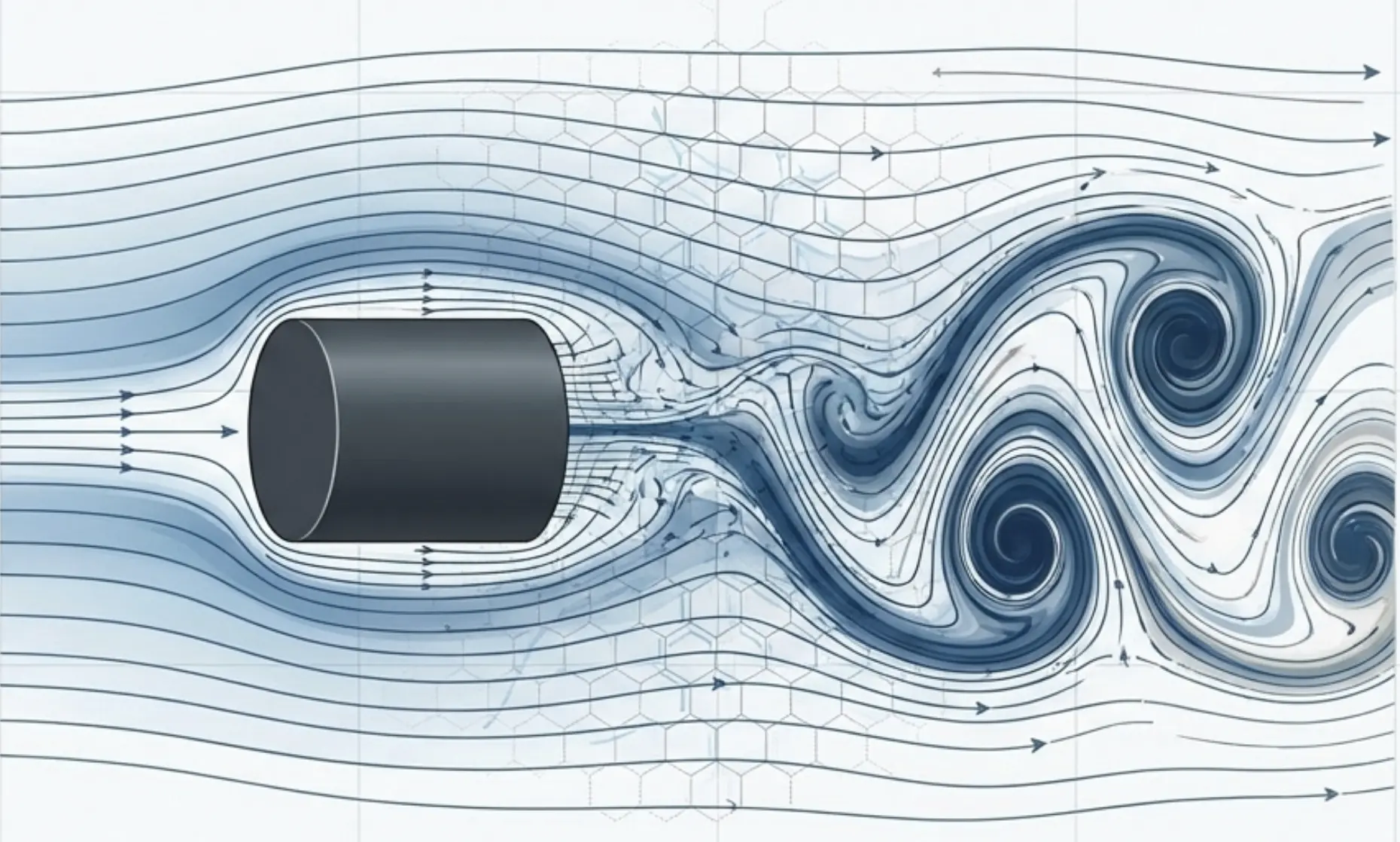
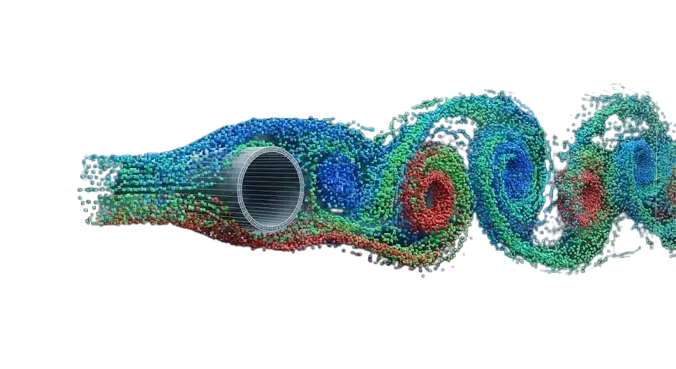
Vortex shedding control at Re=1000. 41.3% lift variance reduction.
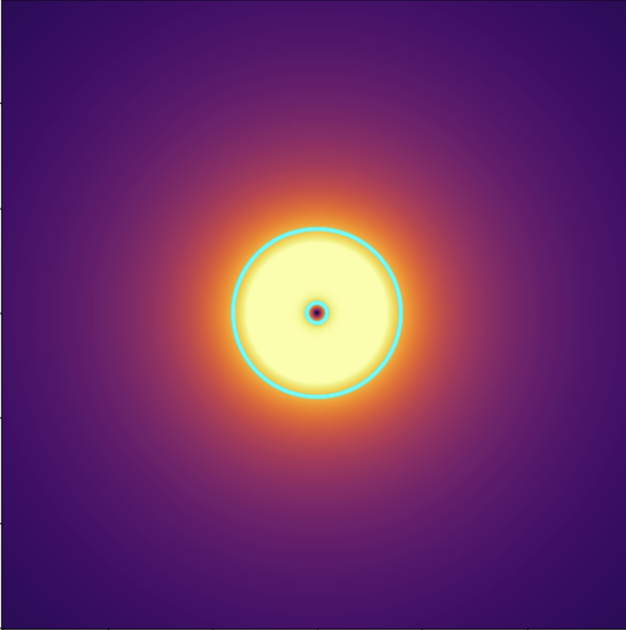
Supersonic sink flow (Mach 1.2) simulating acoustic black holes with spontaneous Hawking radiation.
Scaling to Re > 10⁷ on H100 clusters for production automotive CFD.
The acoustic black hole demo uses the exact same ATOM architecture
that solves automotive CFD.
That's not a tool. That's a foundation model.
Public Beta Alpha 0.1
Democratizing Physical AI. In Q2 2026, we are releasing the ATOM Research Toolkit—giving the community the tools to be at the frontier of Physical AI.
Pure JAX implementation of Helmholtz-Fourier Layers. Project your gradients onto the solenoidal manifold with a single decorator.
A library of differentiable D2Q9, D3Q19, and D3Q27 lattice kernels. Built for GPU-accelerated inverse design.
Gradient-based optimization primitives pre-coupled with our Hamiltonian Integrators for aerodynamic shape optimization.
Engagement Paths
8-week proof-of-concept on your geometry. Validate speedup and accuracy against your existing CFD pipeline.
Joint research, co-publication, technology integration. For corporate R&D labs and academic institutions.
Pre-seed funding, strategic investment, or acquisition discussions. For VCs and corporate development teams.